
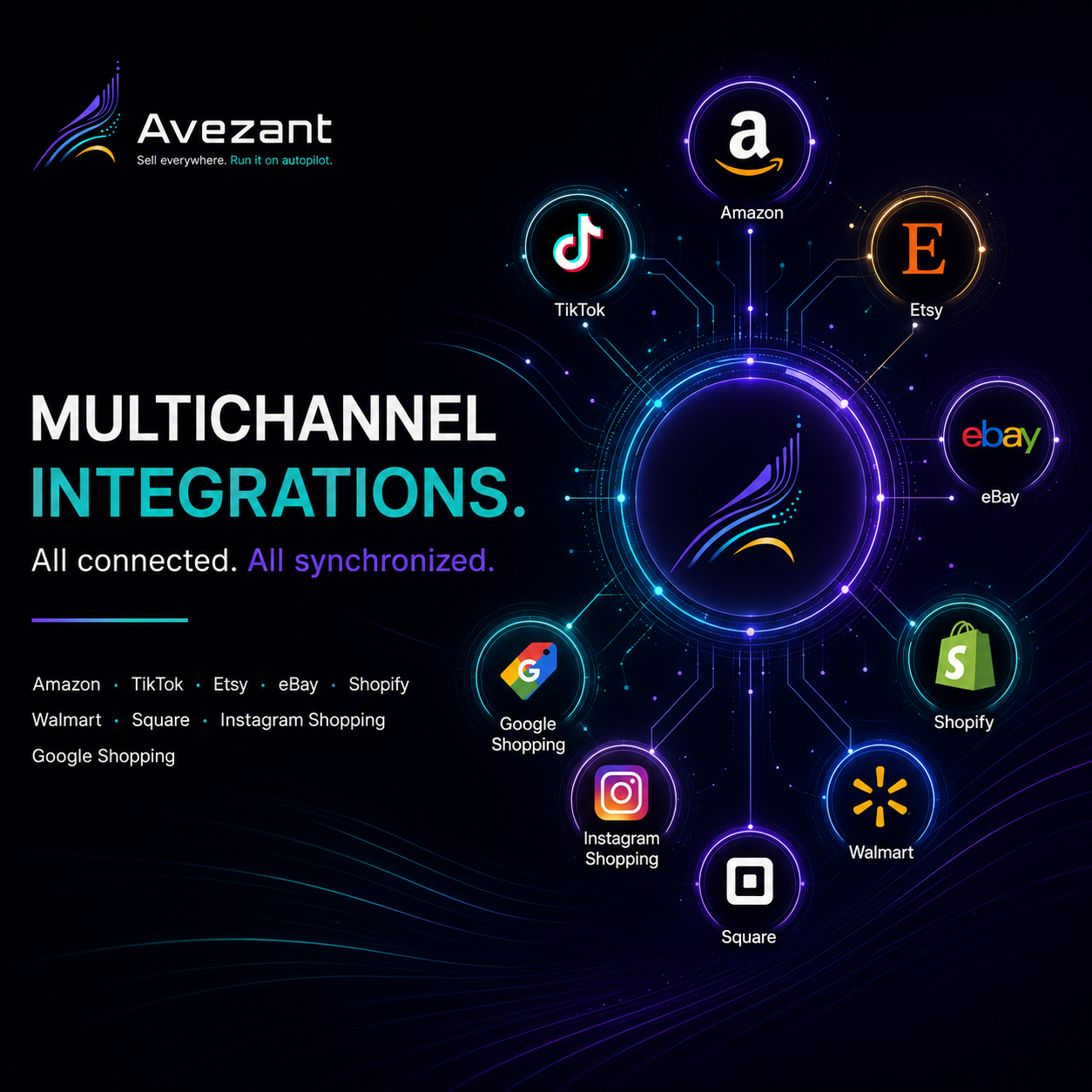
Selling in more than one place used to mean running more than one business. A separate login for every channel, a separate spreadsheet, a separate version of the truth about what’s actually in stock. Most growing brands still operate this way — not because it works, but because nobody’s had the time to fix it.
Channel integration is the fix. And it’s one of those rare operational changes that’s genuinely painful to set up and genuinely transformative once it’s running.
What “unified” actually means
Integration sounds like a technical detail. In practice, it’s the difference between a business that knows, in real time, exactly what it has, what it’s selling, and where — and one that finds out three days late, usually from a refund request.
Unification means every channel a business sells through pulls from the same inventory count, the same product data, and the same order history. One number. One truth. No matter where the sale happened or how many places a product is listed.
The part that doesn’t make it into the pitch: it’s tedious at first
Every integration project starts the same way — messy. Product catalogs that grew organically across channels rarely match each other. The same item can end up with three different names, three different SKUs, and three different sets of photos depending on where it was originally listed. Someone has to reconcile all of that before any system can treat it as one product instead of three.
Then there’s the historical data: years of orders, stock adjustments, and small inconsistencies nobody was ever assigned to clean up. Mapping all of it into a single structure takes real hours, and for a few weeks things often look slower and messier before they look better. Old mismatches surface as errors. Staff have to unlearn habits built around the old, disconnected way of doing things. The temptation to go back to the familiar spreadsheet is real.
This is the stage where most businesses either commit or quietly give up. The ones that push through the setup are the ones that end up with a real advantage — not just a slightly tidier back office.
Then the payoff shows up, and it compounds
Once a business is actually unified, the benefits don’t arrive all at once. They stack:
- Nothing gets sold twice. When stock is tracked in one place, a sale on one channel instantly updates availability everywhere else. Overselling — and the refunds, cancellations, and damaged trust that come with it — stops being a routine cost of doing business.
- Decisions get faster, because the data is finally trustworthy. When every channel reports into the same system, a business owner can look at one dashboard and know what’s actually true, instead of stitching together five exports and hoping they agree.
- Growth stops requiring more headcount. Adding a new sales channel used to mean adding a new manual process to manage it. Once everything is unified, adding a channel is closer to flipping a switch than starting a new job.
- Pricing and promotions stay consistent. Customers increasingly shop the same brand in more than one place before buying. A unified setup means the price and the offer they see match everywhere, instead of eroding trust with inconsistency.
- Time gets redirected toward growth. Hours that used to go into manually reconciling stock counts and cross-checking orders go back into product, marketing, and customers instead.
Inventory control becomes a habit, not a fire drill
One of the most underrated side effects of integration is what it does to inventory discipline. When every channel shares one source of truth, a business is forced to actually know its numbers — what’s on hand, what’s incoming, what’s committed to an order but not yet shipped. That level of visibility is hard to maintain manually, so most businesses without it don’t really have it; they have an estimate.
Once the systems are unified, tracking inventory stops being a periodic scramble and becomes a background habit — especially once automation takes over the parts that used to require someone checking a spreadsheet every morning. Reorder points get set with real data instead of a hunch. Slow-moving stock gets spotted before it ties up cash for months. Fast-moving items get restocked before they run out and cost a sale. None of that requires more effort once it’s running — it requires having gone through the setup that made it possible in the first place.
Why this matters more as a business grows
The math of running channels manually doesn’t scale in a straight line — it scales worse than that. Two disconnected channels are annoying. Five or six disconnected channels are a full-time job, and usually more than one person’s. Every additional channel added without integration multiplies the chances of a mismatch, a missed order, or a stock count that’s simply wrong by the time anyone looks at it.
Businesses that integrate early build the habit and the infrastructure while the stakes are still small. Businesses that wait usually end up doing the same tedious setup work later — just under more pressure, with more historical mess to untangle, and with more revenue riding on getting it right.
The bottom line
Integration is genuinely tedious in the beginning. There’s no version of connecting years of scattered product and order data that happens instantly or without friction. But the businesses that get through that stage aren’t just a little more organized afterward — they’re running on a fundamentally different operating model. One where inventory is trustworthy, growth doesn’t require proportional effort, and the time that used to go into reconciling channels goes into building the business instead.
The setup is the cost. Everything after it is the return. If you want a clear picture of where your own channels stand today, a free audit is the fastest way to find out.